Keeping Your Yoga Practice While Traveling
Travel is where home yoga practices go to die, and it is also where they prove themselves. The practitioner who can keep a modest practice alive in hotel rooms and guest bedrooms has built something durable; the one whose practice requires the home corner, the specific mat, and the usual playlist has built a ritual with a single point of failure. The good news is that traveling practice is a learnable skill with a small toolkit.
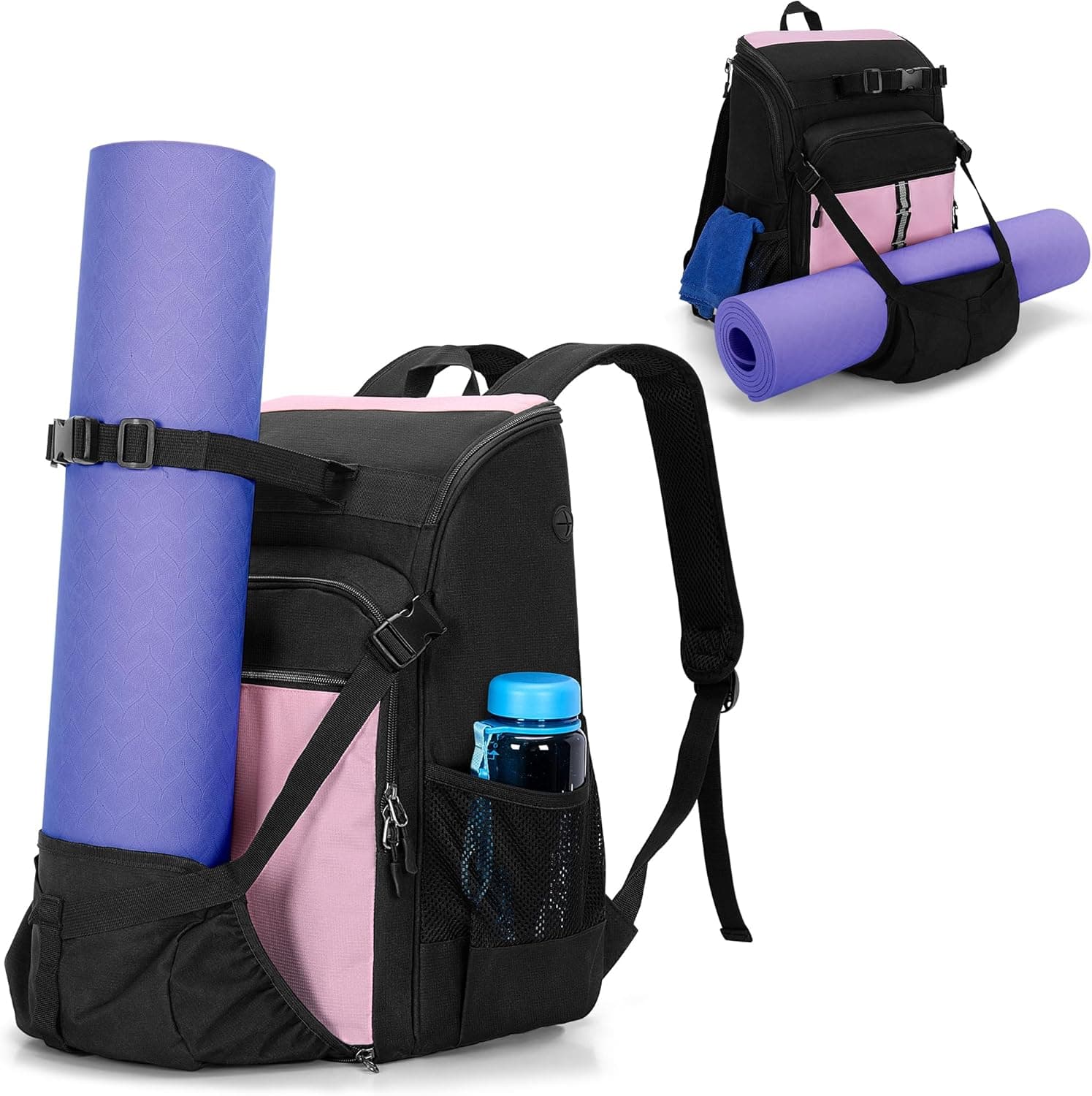
Gear first, because it is the easiest problem. A dedicated travel mat that folds to the size of a shirt weighs around a kilogram and fits any suitcase. But you can also skip it entirely: a hotel towel on carpet handles gentle practice, and standing poses, balance work, and most floor stretches work on a bare clean floor. A strap packs flat and earns its place; blocks are replaceable by books, and bolsters by folded duvets and pillows, which hotels supply in abundance.
Travel also gives the practice a clear job: undoing what transit does. Flights and long drives compress the same areas as desk work, hips, hamstrings, and upper back, and add swollen ankles and a stiff neck. The arrival-day sequence writes itself: a few rounds of cat-cow, downward dog, low lunges, a standing fold, a reclined twist, and ten minutes of legs up the wall, which is the single best pose after a long flight and requires literally nothing but a wall.
Shrink the commitment to fit the context. On the road, the daily minimum might be five minutes: two sun salutations and a fold, done in pajamas beside the bed. The point of the minimum is not physical training; it is keeping the thread unbroken, so that returning home means resuming rather than restarting. Morning practice tends to survive travel best, since evenings get eaten by dinners, delays, and unfamiliar schedules.
Different trips call for different practices. Vacation travel can absorb a fuller session, and practicing outdoors, a beach, a quiet park, a terrace, is one of travel's genuine pleasures. Work trips with packed agendas call for the five-minute maintenance dose plus movement snacks: a standing backbend and shoulder rolls between meetings, a hamstring stretch on the hotel room desk. Jet lag responds gently to practice too; moving and breathing on arrival helps the body register the new day.
The deeper shift is treating the practice as something you carry rather than somewhere you go. A few memorized sequences, a tolerance for imperfect floors, and a five-minute minimum make you self-sufficient anywhere with two square meters of space. Practitioners often return from trips to find their home practice refreshed, because travel strips the routine down to what actually matters: breath, movement, and attention, none of which require luggage.
Time zones and unfamiliar schedules argue for anchoring practice to events rather than clock times: after waking, before showering, upon returning to the room. Event anchors travel with you; alarm-based habits do not. It also helps to decide before the trip what the travel version of your practice is, five minutes, which poses, when, because deciding in the hotel room after a long day is how the practice quietly disappears. Write the mini-sequence in your phone notes, pack the strap in an outside pocket, and the whole system survives on autopilot precisely when your willpower is at its weakest.