How to Stop Slipping on Your Yoga Mat
Sliding hands in downward dog or feet creeping apart in a wide-legged pose break concentration and can strain wrists, shoulders and hamstrings. Slipping usually comes from sweat, a new mat with a factory coating, oils from lotion or a mat material that does not suit how much you sweat. Most people can fix grip without buying a new mat, and when they do upgrade, knowing what to look for avoids another slippery purchase.
Break in a new mat
Many new PVC and TPE mats have a thin manufacturing residue that makes the surface feel slick for the first few weeks. Wiping the mat with a damp cloth and a little mild soap, then rinsing and drying it, often removes the film and improves grip.
Some yogis rub the mat surface with a coarse salt and water paste and rinse it off, or simply practise on it more often, since regular use wears the slippery layer away. Check the manufacturer's care instructions first, because some natural rubber and suede-topped mats need gentler cleaning.
Skip lotion before practice
Hand cream, body lotion and sunscreen leave oils on your skin that transfer straight to the mat and make it slick. Even a small amount applied an hour earlier can affect grip in poses where you bear weight on your hands.
Wash your hands and feet before practice to remove oils and dirt, and save moisturiser for afterwards. Keeping the mat clean also prevents a gradual build-up of oils that no amount of pressing can grip through.
Use a yoga towel for sweaty practice
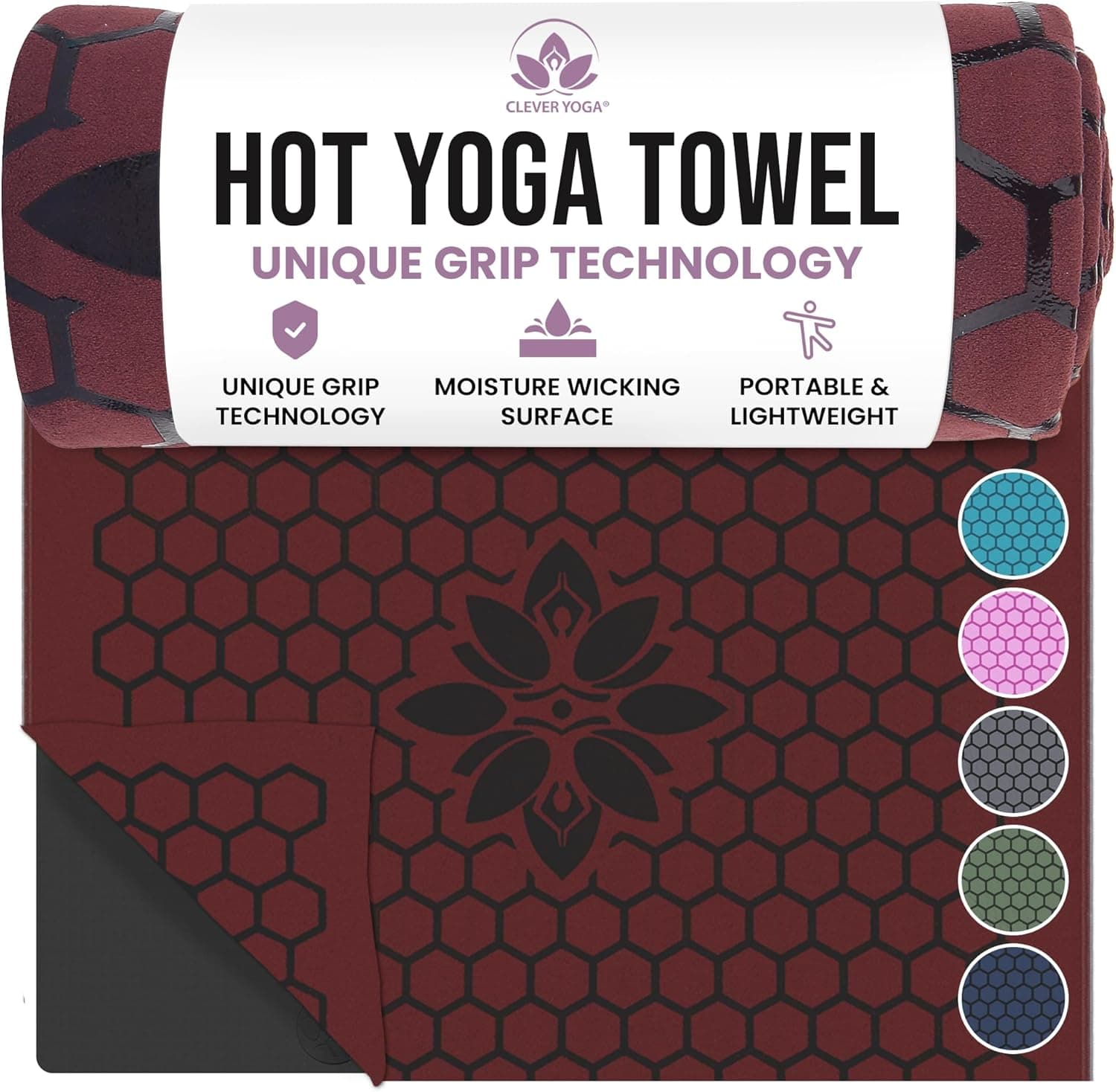
If you sweat a lot, especially in warm rooms or dynamic flows, sweat pools on the mat surface and becomes a slippery layer. A microfibre yoga mat towel laid over the mat absorbs moisture and actually grips better as it becomes slightly damp.
Many towels have silicone nubs on the underside to stop them sliding on the mat. Lightly misting the towel with water at the start of practice helps it grip from the first pose rather than after you have started sweating.
Choose a mat material that suits you
Natural rubber mats generally offer excellent grip when dry and slightly damp, and polyurethane-topped rubber mats absorb moisture well for sweaty practice. Cork mats become grippier as they get damp, which suits hot yoga and people with sweaty hands.
Inexpensive PVC mats can be very slippery once wet. Natural rubber is not suitable for people with latex allergies, so check materials carefully before buying.
Clean the mat regularly
Sweat, skin oils and dust build up over time and create a slick film. Wipe the mat after each practice with a damp cloth or a mat cleaner designed for the material, and deep clean it periodically according to the care label.
Avoid harsh chemicals, essential oils in high concentrations and soaking natural rubber mats, which can break down the surface. Let the mat dry completely before rolling it up.
Refine your alignment
Grip also depends on how you press into the mat. In downward dog, spread your fingers wide and press evenly through the knuckles and fingertips rather than sinking into the heels of your hands.
Engaging your arms and legs and keeping weight distributed evenly reduces sliding. Shortening your stance slightly can also help while you work on strength and flexibility.